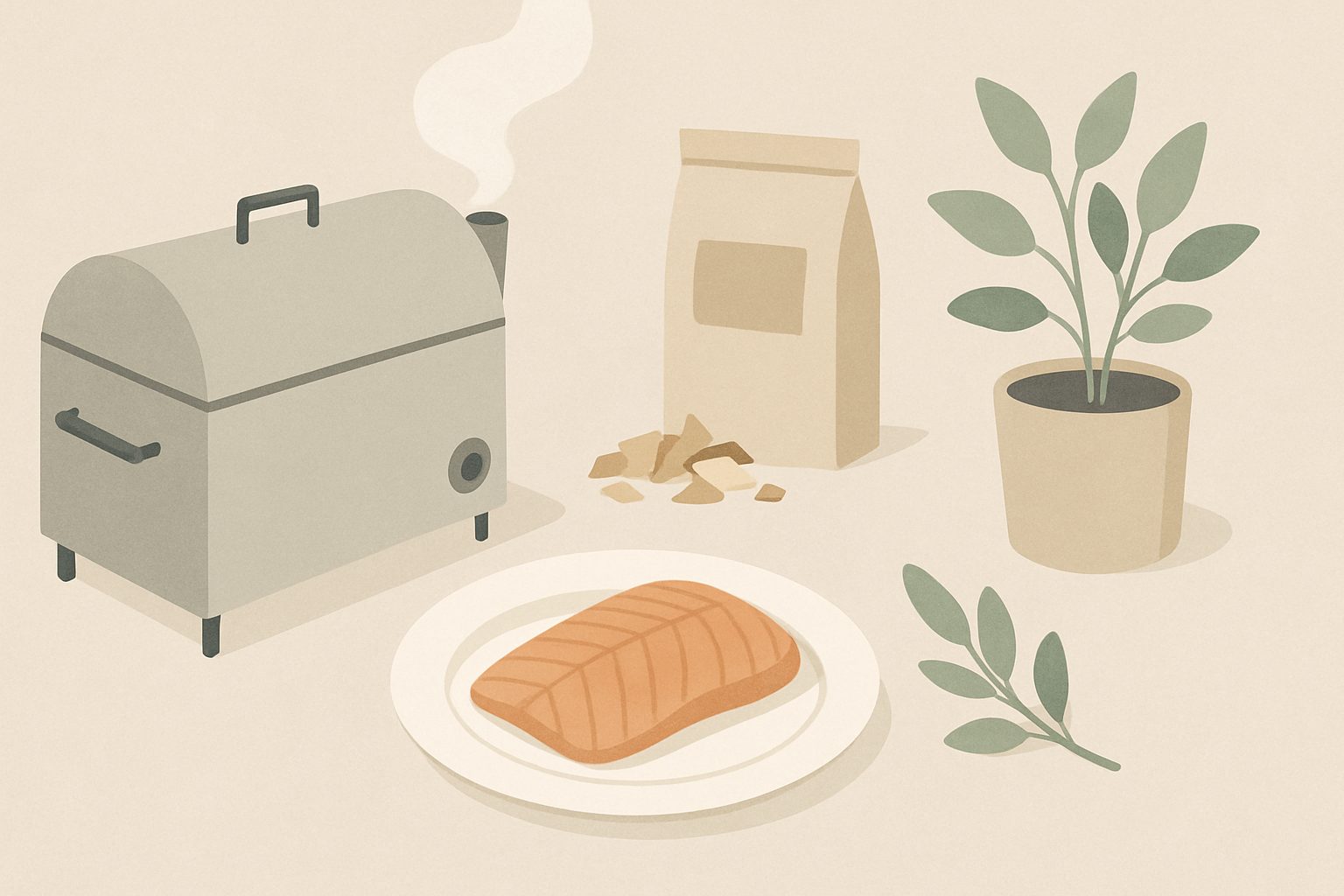
How to Cold Smoke Salmon at Home UK – Step-by-Step Guide
Cold smoking salmon at home is more achievable than most people think, but it demands precision in two areas: food safety and temperature control. Unlike hot smoking, which cooks the fish, cold smoking keeps it raw and requires meticulous attention to brining, drying, and maintaining temperatures below 30°C throughout. Here's exactly how to do it properly in a UK kitchen or garden setup.
Why Cold Smoking Works Differently
Cold smoking preserves fish through salt curing rather than heat. The brine draws out moisture and inhibits bacterial growth, then a long, cool smoke infuses flavour without cooking the flesh. The result is silky, translucent salmon with a smoky depth that hot smoking simply can't replicate. The process takes 24–48 hours from start to finish, so plan accordingly.
Brining Your Salmon: The Foundation
Start with quality salmon fillets—aim for 500g to 1kg pieces so they brine evenly. The brine ratio matters: you need a salt cure that's strong enough to preserve but not so aggressive it becomes unpleasantly salty.
Your brine formula:
- 100g salt (sea salt or kosher salt; avoid iodised table salt)
- 50g demerara or muscovado sugar
- 1 litre cold water
- Optional: 1 teaspoon black pepper, 2–3 bay leaves, 1 tablespoon coriander seeds
Dissolve the salt and sugar in the water completely. Place your salmon skin-side down in a non-reactive container (glass or plastic) and pour the brine over until the fish is fully submerged. Weigh it down if needed—use a plate or a ziplock bag filled with brine to keep the fillet beneath the surface.
Brine for 12–18 hours in a cool place (ideally 4–10°C, so your fridge works perfectly). The salmon will firm slightly and the flesh will take on a translucent, glazed appearance. This is normal and exactly what you want.
Rinsing and Drying the Pellicle
After brining, remove the salmon and rinse it thoroughly under cold running water for 2–3 minutes per side. Pat it completely dry with kitchen paper.
Now comes the critical step that many home smokers skip: forming the pellicle. This sticky, glossy surface layer seals the fish and allows smoke to adhere properly. Place the salmon on a wire rack (or the grill of your fridge) and leave it uncovered in a cool area for 4–8 hours. A dedicated smoking fridge is ideal, but many UK enthusiasts use a rarely-used garage fridge or garden shed with good air circulation.
The pellicle is ready when the surface feels slightly tacky but not wet—it should have a subtle sheen. Without this layer, cold smoke will simply slide off the fish's surface.
Setting Up Your Cold Smoker
Cold smoking requires a smoke generator that produces smoke without heat. Two generators dominate the UK market:
ProQ Pellet Smoker or similar: A tube smoker filled with wood pellets. It smoulders at the bottom, creating cool smoke that travels through tubing into your smoking chamber. The advantage is simplicity—load it and leave it for hours. The downside is fuel consumption (50–100g per hour, depending on pellet quality).
Smokai Generator or cold smoke box: These use compressed bellows to force air through burning wood dust in an insulated chamber, keeping the smoke cool. They're brilliant for short bursts but require a bit more hands-on attention.
For either setup, your smoking chamber can be as simple as a cardboard box with a thermometer hole, a repurposed fridge, or a proper Bradley or Smoke Chief smoker. Position the smoke inlet at one end and create a small vent (roughly 2cm diameter) at the opposite end for air circulation.
Temperature management is non-negotiable. Attach a digital max/min thermometer inside your chamber. Ideally, you want 15–25°C. In warm months (May–September), cold smoking becomes risky in the UK—the ambient temperature climbs into the danger zone. Many UK smokers use ice blocks or even dry ice to keep the chamber cool. Place a bowl or tray of ice (not touching the fish) on the floor of your smoker, refreshing it every 2–3 hours.
Choosing Your Wood Dust
Cold smoking relies entirely on flavour—there's no Maillard reaction or charring. Oak and applewood are the classics. Hickory is too aggressive for salmon. Alder, if you can source it, is traditional in Scotland and works beautifully.
Use food-grade wood dust, not wood chips. Chips burn too fast and hot; dust smoulders slowly and evenly. ProQ pellets are reliable and available across the UK. If using a tube smoker, expect to feed it every 3–4 hours during an overnight smoke.
The Smoking Process
Load your salmon onto the racks, skin-side down, with space between pieces so smoke circulates freely. Light your generator and let it settle into a steady, thin-smoke output—you want wispy smoke, not billowing clouds. Dense smoke often indicates the temperature is too high.
Smoke for 12–18 hours, depending on your taste. Most home smokers aim for 16 hours. Check the temperature every few hours and refresh ice if necessary. Smoke colour should be pale golden, not dark or sooty.
Finishing and Storage
Once smoked, the salmon will have a thin, caramel-coloured pellicle on the outside. Slice it thinly on the diagonal, or wrap the whole side in baking parchment and chill for 24 hours before slicing (the texture improves overnight).
Store cold smoked salmon in an airtight container in the fridge for up to 2 weeks, or freeze for 3 months. It's ready to eat immediately—no further cooking needed.
The time investment is substantial, but the result is far superior to shop-bought smoked salmon and genuinely impressive served with cream cheese, capers, and warm buttered toast.
More options
- ProQ Cold Smoke Generator (Amazon UK)
- Masterbuilt Electric Smoker Cabinet (Amazon UK)
- Bradley Smoker Original 4-Rack (Amazon UK)
- Angus & Oink Wood Chip Variety Pack (Amazon UK)
- Inkbird Wireless Meat Thermometer (Amazon UK)